

The ration card system plays a vital role in protecting food security for millions of poor and middle-income families who depend on government welfare schemes for their daily survival. It ensures access to subsidized food grains and essential items, helping households cope with inflation, unemployment, and economic instability. For vulnerable communities, a ration card is more than an identification document; it represents dignity, survival, and social protection. Any disruption in this system, especially due to corruption or bribery, directly affects the basic right to food and deepens inequality within society.
In countries where the public distribution system (PDS) supports a large section of the population, transparency and honesty are non-negotiable. Despite strict laws and clear procedures, bribery demands, misuse of official authority, and administrative corruption continue to plague ration card services. When officials responsible for delivering public benefits exploit their position for personal gain, it reflects serious institutional weaknesses. Such practices turn welfare programs into tools of harassment and exploitation, forcing poor families to choose between paying illegal money or going hungry.
The shocking incident of a ₹3,000 bribe demanded for issuing a ration card has once again exposed the fragile state of accountability in public services. A scheme designed to support the underprivileged became a source of fear and financial burden for a needy citizen. This case highlights the urgent need for strong anti-corruption enforcement, digital transparency, and strict monitoring of ration shops. More importantly, it emphasizes that without ethical governance and public vigilance, even essential welfare systems can fail the very people they are meant to protect.
Overview of the Ration Card System
The ration card system is one of the most critical government welfare initiatives aimed at providing food security to millions of low-income families. It ensures that vulnerable citizens receive subsidized essential commodities such as rice, wheat, sugar, and pulses, helping them survive periods of inflation and economic uncertainty. A ration card is not just a document but a lifeline for daily sustenance, particularly for families who rely on public distribution systems (PDS) to meet their nutritional needs.
In addition to food distribution, a ration card serves as proof of identity and residence, which is often required to access other government welfare programs. The system’s effectiveness depends heavily on transparency, accountability, and timely service. Any corruption or delay in issuing ration cards threatens the well-being of citizens, highlighting the need for ethical governance and strict monitoring to ensure that the benefits reach the most deserving families.
What Is a Ration Card and Why Is It Important
A ration card is an official government-issued document that allows eligible citizens to purchase subsidized food grains and essential commodities through the public distribution system. For low-income households, it acts as a social safety net, ensuring that even during times of financial strain, they have access to basic nutrition. The card is especially vital for daily wage earners and marginalized communities, who rely on it to maintain minimum living standards.
Beyond food access, a ration card is often required as proof of identity for other welfare programs. This dual role increases its significance in protecting citizens from economic instability and hunger. Any disruption, manipulation, or corruption in this system can severely impact food security, making transparency and fairness essential.
Types of Ration Cards Under the Public Distribution System
The ration card system includes multiple types, such as Below Poverty Line (BPL), Above Poverty Line (APL), and Antyodaya Anna Yojana (AAY) cards. Each category targets families based on income, economic status, and family size, allowing the government to provide subsidized food effectively. Proper classification ensures that the most vulnerable families receive the maximum benefits.
However, loopholes in monitoring anda lack of public awareness often allow corruption and favoritism to occur. Misuse of authority in the classification process can deny benefits to deserving families while favoring others unfairly. This highlights the need for strict accountability, monitoring, and public awareness campaigns to maintain the system’s integrity.
Role of Ration Shops and Responsibilities of the Manager
Ration shops serve as the final point of contact between the government and beneficiaries. They are responsible for distributing subsidized food items according to official guidelines, maintaining records, and verifying ration cards. The ration shop manager holds significant responsibility in ensuring that the system operates efficiently and fairly.
When managers demand illegal payments or engage in corruption, it undermines the purpose of welfare programs and exploits vulnerable families. Strong monitoring, transparency, and enforcement of rules are critical to ensure that ration shops function ethically, safeguarding public trust and the welfare of needy citizens.
Ration Card Distribution Process
The ration card distribution process is a structured mechanism designed to ensure that subsidized food grains and essential commodities reach eligible low-income families efficiently. Citizens must apply through official channels, providing proof of identity, residence, and income, to confirm their eligibility. This process is intended to maintain transparency, prevent misuse, and guarantee that only deserving families benefit from the public distribution system (PDS). By following strict verification procedures, the government aims to reduce fraud and corruption, ensuring fair access for all applicants.
Once the application is submitted, government authorities review and verify the details before issuing a ration card. During this stage, the role of ration shops and managers becomes crucial as they coordinate the distribution process and maintain accurate records. Any deviation, delay, or demand for illegal payments can compromise the integrity of the system and cause significant distress to families who depend on these benefits for their daily nutrition. The process highlights the importance of accountability, transparency, and timely service in public welfare programs.
After verification, approved applicants receive their ration cards, allowing them to access subsidized essential goods at local ration shops. Modernization, such as digital ration cards, biometric verification, and online tracking, has improved efficiency and reduced opportunities for corruption. However, without vigilant monitoring and ethical practices, even a well-structured system can be exploited. Ensuring a smooth, transparent distribution process is essential not only for food security but also for maintaining public trust in government welfare programs.
Corruption in the Ration Distribution System
Corruption in the ration distribution system has become a serious concern, undermining the purpose of public welfare programs. Officials or middlemen often demand illegal payments from applicants to provide ration cards or essential commodities, exploiting vulnerable families. Such practices delay access to vital resources, disrupt food security, and erode public trust in government services. Even a small bribe, like the recent ₹3,000 case, can have a huge impact on low-income households who rely on the public distribution system (PDS) for survival.
The presence of corruption not only affects individual families but also exposes systemic weaknesses in monitoring and accountability. Loopholes in the verification process, lack of digital tracking, and minimal oversight create opportunities for bribery, favoritism, and fraud. Addressing these issues requires stronger enforcement, transparent processes, and strict legal action against corrupt officials to ensure that welfare schemes reach the most deserving beneficiaries.
Common Forms of Corruption in Ration Distribution
One of the most prevalent forms of corruption is the demand for illegal bribes during ration card issuance or renewal. Applicants may be forced to pay money to receive benefits they are legally entitled to, turning a basic public service into a tool of exploitation. Middlemen often act as intermediaries, further complicating the process and increasing the burden on poor families.
Other forms include manipulation of beneficiary lists, overcharging for subsidized goods, or diverting commodities to the black market. These practices not only deny the rightful entitlements of vulnerable families but also weaken the credibility of the government welfare system. Consistent monitoring, audits, and digital record-keeping are essential to prevent such corruption and ensure fair and timely distribution.
Impact of Corruption on Vulnerable Families
Corruption in ration distribution has a direct and harmful impact on low-income households. Families may face delays in receiving essential commodities, or they may be forced to pay extra money to access their legal entitlements. This financial burden increases economic stress and reduces the overall effectiveness of welfare schemes.
Moreover, repeated instances of corruption erode public trust in government programs. When people feel exploited or ignored, they may lose faith in the fairness of public distribution systems, which undermines the entire purpose of social welfare initiatives. Protecting beneficiaries through strict enforcement and public awareness is crucial to maintaining both food security and social justice.
₹3,000 Bribe Case: What Happened?
The shocking case of a ₹3,000 bribe taken for issuing a ration card has brought attention to the ongoing problem of corruption in public welfare systems. The incident involved a ration shop manager who demanded money from a deserving applicant before providing access to subsidized food grains. This blatant misuse of authority highlights how even critical services like the public distribution system (PDS) are vulnerable to exploitation, leaving low-income families stressed and unfairly treated.
The case quickly drew media attention and public outrage due to its audacity. It serves as a clear example of how corruption can directly affect food security and social welfare. Citizens and watchdog organizations demanded immediate action, emphasizing the importance of ethical governance, accountability, and strict enforcement of anti-corruption laws to prevent such incidents in the future.
Background and Location of the Incident
The incident took place at a local ration shop, where the applicant had applied for a ration card as per official procedures. Instead of following the standard verification process, the shop manager exploited his position to demand ₹3,000 for what should have been a free service. This highlights the systemic weaknesses in monitoring and enforcing transparency in welfare schemes.
Authorities were alerted after the applicant reported the bribery, prompting an immediate investigation. The location, though local, gained nationwide attention because it reflects a broader issue affecting the public distribution system across regions. Cases like this underscore the need for strict supervision, digital tracking, and public vigilance to protect citizens from such corruption.
Public Reaction and Media Attention
The news of the ₹3,000 bribe spread rapidly through social media and local news channels, triggering widespread condemnation. Citizens expressed frustration over how essential services for vulnerable families were being monetized illegally. This public outcry not only amplified awareness but also pressured authorities to take swift action against the corrupt ration shop manager.
Media coverage played a crucial role in highlighting the case as a symbol of the challenges faced by the ration card system. The incident became an example of why continuous monitoring, accountability, and anti-corruption measures are essential to maintain the integrity of public welfare programs and protect the rights of low-income families.
Complaint and Investigation Process
Once the bribery incident was reported, the complaint and investigation process was initiated immediately to ensure accountability and justice. The applicant filed a formal complaint with the anti-corruption authorities, highlighting the illegal demand for ₹3,000 by the ration shop manager. This step is critical in ensuring that the public distribution system (PDS) operates fairly and that low-income families are protected from exploitation. Filing a complaint activates the legal machinery, allowing authorities to gather evidence and take necessary action against the responsible official.
After receiving the complaint, the anti-corruption team conducted a thorough investigation, which included collecting statements from the applicant, witnesses, and other residents. Surveillance, record verification, and on-site inspections were carried out to ensure that the claim of bribery was substantiated. By documenting each step meticulously, the authorities aimed to build a strong legal case against the corrupt manager, highlighting the importance of transparency, accountability, and law enforcement in public welfare systems.
The investigation process culminated in the implementation of a trap operation, where the ration shop manager was caught red-handed while demanding the bribe. This not only provided concrete evidence for legal proceedings but also sent a strong message about the government’s commitment to anti-corruption measures. The case serves as a reminder that vigilant reporting, swift investigation, and proper enforcement are essential to protect citizens and maintain the integrity of public welfare programs.
Arrest of the Ration Shop Manager
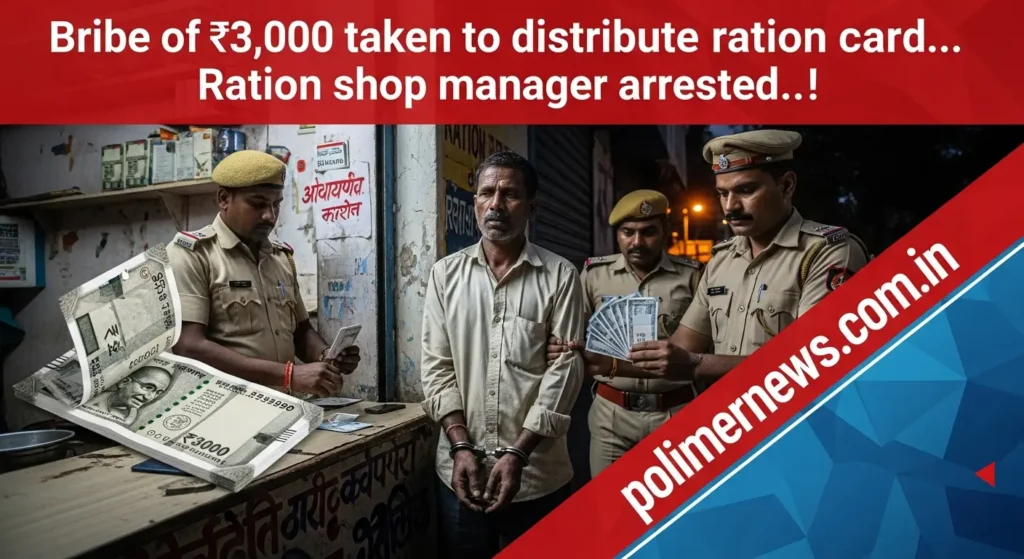
The arrest of the ration shop manager marked a crucial step in enforcing accountability and anti-corruption measures. Following a detailed investigation and trap operation, authorities caught the manager while attempting to collect the ₹3,000 bribe from the applicant. This immediate action highlights the importance of vigilant law enforcement in maintaining the integrity of public welfare programs and ensuring that the public distribution system (PDS) serves its intended purpose.
The swift arrest also sent a strong message to other officials involved in the ration distribution process. It reinforced the notion that corruption and bribery will not be tolerated, and those attempting to exploit citizens for personal gain would face legal consequences. The case demonstrated the effectiveness of transparent reporting mechanisms combined with proactive government oversight.
Evidence Collection and Legal Documentation
Authorities ensured that all evidence was properly documented, including statements from the applicant and witnesses, as well as the recovered cash. This meticulous documentation is critical for building a strong legal case and ensuring that justice is served. By maintaining a clear chain of evidence, the authorities reinforced the importance of the rule of law and ethical governance in the public sector.
The legal documentation also included official records of the trap operation, which served as undeniable proof of wrongdoing. These documents not only support the prosecution process but also help in preventing future misconduct by other officials. Proper legal documentation is essential for transparent governance and maintaining public trust in welfare programs.
Public Reaction and Media Coverage
The arrest quickly attracted media attention, with news channels and social media highlighting the incident as a clear case of corruption within the ration distribution system. Citizens expressed relief and satisfaction that action was taken against the corrupt official, emphasizing the need for strict enforcement of anti-bribery laws.
Media coverage played a pivotal role in spreading awareness about the case, encouraging other victims of corruption to report similar incidents. The incident reinforced the importance of public vigilance, transparency, and accountability, showing that citizen reporting combined with swift law enforcement can effectively curb corruption in public welfare schemes.
Legal Charges and Applicable Laws
The ration shop manager in the ₹3,000 bribery case faced multiple legal charges under anti-corruption laws and relevant sections of the Indian Penal Code (IPC). Accepting or demanding a bribe as a government official is a criminal offense punishable by imprisonment, fines, or both. These laws are designed to protect citizens from exploitation and ensure that public welfare programs function efficiently and fairly.
In addition to criminal charges, the case involved administrative action under government regulations governing public distribution systems (PDS). Misuse of authority by officials can result in suspension, termination, or permanent removal from government service. By enforcing these laws, authorities aim to maintain accountability, transparency, and ethical governance in public welfare initiatives.
Sections of Law Applied in the Case
The primary sections applicable to this case include those related to criminal bribery and corruption under the IPC. These sections criminalize the acceptance or solicitation of money for performing official duties, highlighting the legal consequences of exploiting vulnerable citizens. Strict application of these laws ensures that government officials are held accountable for their actions.
Alongside criminal charges, provisions of anti-corruption legislation empower authorities to conduct investigations, seize evidence, and prosecute offenders. Legal action in such cases not only punishes wrongdoing but also serves as a deterrent for other officials. This emphasizes the importance of law enforcement, public vigilance, and ethical practices in maintaining the credibility of welfare programs like the ration card system.
Importance of Enforcement for Public Trust
Strong enforcement of legal provisions is crucial to restoring public confidence in government services. When officials are held accountable for corruption, it reinforces the principle that no one is above the law, and vulnerable families can access their rightful entitlements without harassment.
Public awareness of legal consequences also encourages citizens to report corruption. A combination of strict legal action, monitoring, and transparency strengthens the entire public distribution system, ensuring that welfare programs fulfill their intended purpose of protecting the poor and ensuring food security.
Government’s Official Stand
Following the exposure of the ₹3,000 bribery case, the government authorities took a firm stance to ensure that corruption within the public distribution system (PDS) is not tolerated. Officials emphasized that the ration card system is meant to provide food security and welfare benefits to deserving families without interference. The government reaffirmed its commitment to ethical governance, accountability, and transparency, promising strict enforcement against any official involved in bribery or misuse of authority.
Authorities also highlighted the role of public vigilance in identifying corrupt practices. Citizens reporting such incidents are crucial for protecting the integrity of welfare programs. By acting swiftly, the government aimed to send a clear message that any form of corruption or exploitation in public services would face legal consequences, thereby strengthening public trust in the system.
Official Statements and Press Releases
Government officials issued press releases emphasizing the seriousness of the case and the steps taken to ensure justice. They outlined the trap operation, arrest, and recovery of evidence, showcasing the effectiveness of anti-corruption measures. These statements reinforced the message that transparent processes and strict supervision are central to maintaining the integrity of the ration card system.
The government also reiterated its plans to implement digital monitoring systems, regular audits, and accountability mechanisms to prevent similar incidents in the future. Public statements like these serve as a reassurance that food security programs are being closely monitored and that any breach of trust will result in immediate legal action and administrative penalties.
Steps for Future Prevention
In response to the case, the government announced measures to enhance the transparency of the public distribution system. These include digitized ration cards, biometric verification, and online grievance redressal portals, aimed at reducing opportunities for bribery.
Authorities stressed the importance of continuous monitoring, strict enforcement, and public awareness campaigns. By combining technology with strong legal frameworks, the government seeks to protect low-income families and ensure that welfare schemes like the ration card program reach their intended beneficiaries without any interference or corruption.
Impact on the Ration Shop Network
The ₹3,000 bribery case had a significant impact on the entire ration shop network, highlighting vulnerabilities in the public distribution system (PDS). Following the incident, authorities increased monitoring and inspections across multiple shops to ensure that subsidized food grains were distributed fairly. The case served as a warning to other ration shop managers about the consequences of corrupt practices, emphasizing the importance of ethical governance and accountability.
This incident also triggered internal reviews and audits, aimed at identifying loopholes in the distribution process. By scrutinizing inventory management, beneficiary lists, and staff conduct, the government sought to restore public trust and maintain the credibility of the ration card system. The increased vigilance ensures that low-income families can access their entitlements without facing harassment or exploitation.
Reaction of Managers and Staff
The arrest sent a clear message to other ration shop staff, encouraging them to adhere strictly to official guidelines. Many shops implemented internal compliance checks to avoid any suspicion of malpractice. This collective response reflects how enforcement and awareness can influence ethical behavior in public service roles.
Managers who previously may have engaged in minor corrupt practices became more cautious, understanding the risk of legal consequences and administrative action. By fostering a culture of transparency and accountability, the government aims to reduce incidents of bribery and ensure that food security programs function efficiently and reach the intended beneficiaries without interference.
Strengthening Public Confidence
The case demonstrated that proactive measures, such as trap operations, audits, and enforcement actions, are essential to maintain public trust in welfare programs. By addressing corruption within the ration shop network, authorities not only penalize offenders but also reassure the public that their rights and entitlements are protected.
The impact of this case emphasizes the need for continuous supervision, monitoring, and digital tools to ensure that all ration shops operate transparently. Such measures safeguard food security, social justice, and the integrity of the public distribution system, benefiting millions of families who rely on government welfare programs.
Impact on Poor Families
Corruption in the ration card system has a direct and severe impact on poor families who depend on subsidized food grains for their daily nutrition. When officials demand bribes or delay the issuance of ration cards, it disrupts access to essential commodities, causing financial and emotional stress for families already struggling to make ends meet. Such incidents highlight how corruption in public welfare programs disproportionately affects the most vulnerable members of society.
The ₹3,000 bribery case is a prime example of this impact. Families who are legally entitled to receive ration benefits are forced to pay illegal amounts or wait indefinitely, undermining food security and social protection. Daily wage workers, single-parent households, and marginalized communities face the greatest challenges, as delays or harassment at ration shops can mean going without essential food items for days or weeks.
Furthermore, repeated instances of corruption erode public trust in government welfare schemes. Families begin to feel powerless, fearing exploitation or unfair treatment, which discourages them from accessing services they are entitled to. Protecting beneficiaries through strict enforcement, transparency, and accountability is critical to ensure that low-income families can rely on welfare programs for survival and maintain dignity and social justice.
Public Reaction and Social Media Response
The ₹3,000 bribery case sparked widespread outrage among the public, highlighting growing frustration over corruption in public welfare programs. Citizens expressed anger at the exploitation of low-income families, emphasizing that essential services like the ration card system should be free from harassment and illegal demands. Social media platforms became a hub for discussions, awareness, and mobilization, allowing ordinary citizens to voice their concerns and demand immediate action.
The incident also drew attention to the critical role of public vigilance in curbing corruption. By reporting malpractices and sharing their experiences online, citizens played a part in holding authorities accountable. This case demonstrates how social media advocacy and public awareness can influence government response, ensuring that food security and social welfare programs are protected from abuse.
Media Coverage and Citizen Awareness
Media outlets extensively covered the bribery case, bringing it to national attention. The report highlighted the misuse of authority by ration shop officials and the challenges faced by vulnerable families in accessing subsidized food grains. Coverage like this not only informed the public but also increased pressure on authorities to act swiftly and transparently.
Citizen awareness campaigns intensified as a result of the case, emphasizing the importance of reporting corruption and understanding legal rights. Social media trends and hashtags amplified public demands for accountability and ethical governance, reinforcing the idea that collective action and vigilance are essential in maintaining the integrity of public distribution systems.
How to Report Ration Card Corruption
Reporting ration card corruption is crucial to ensure that public welfare programs function transparently and fairly. Citizens who face demands for bribes or delays in issuing ration cards should immediately report the incident to the anti-corruption authorities or local government offices. Filing a formal complaint helps trigger investigations, protects vulnerable families, and reinforces ethical governance within the public distribution system (PDS).
Timely reporting not only addresses individual cases but also helps identify systemic issues in the ration card process. Applicants are advised to keep records of all interactions, collect evidence, and follow the proper complaint procedure to strengthen their case. Awareness of legal rights and reporting channels empowers citizens to act against corruption, ensuring that food security and social welfare programs reach the intended beneficiaries without interference.
Official Channels for Filing Complaints
Complaints can be filed through multiple official channels, including government helplines, online portals, and local administrative offices. Many states also provide dedicated grievance redressal systems for the ration card distribution process, making it easier for citizens to report corruption confidentially and securely.
Complainants need to provide clear details, including names, locations, dates, and evidence of any bribe demands. Maintaining documentation ensures that authorities can take swift and effective action. Using these official channels not only helps protect the rights of vulnerable families but also strengthens the integrity and accountability of the public distribution system.
Preventing Corruption in Ration Distribution
Preventing corruption in the ration distribution system is essential to ensure that subsidized food grains and welfare benefits reach eligible families without harassment. The government can implement digital ration cards, biometric verification, and online tracking systems to reduce the chances of bribery. These measures improve transparency, efficiency, and accountability, making it harder for officials to exploit their authority.
Equally important is public awareness and training for ration shop staff. Educating citizens about their legal rights and the correct procedures for obtaining ration cards empowers them to report malpractices. Regular audits, inspections, and monitoring reinforce ethical practices and help maintain public trust in welfare programs.
Role of Technology in Reducing Corruption
Modern technology plays a crucial role in curbing corruption within the public distribution system (PDS). Digital platforms allow applicants to track their applications online, receive SMS alerts, and verify their ration card status without physical intervention, reducing the opportunity for bribe demands.
CCTV monitoring and electronic record-keeping at ration shops further strengthen accountability. By combining technology with strict oversight, authorities can ensure that food security programs operate efficiently, transparently, and fairly, protecting the rights of low-income families and preventing misuse of public resources.
Role of Technology in Reducing Bribery
Technology has transformed the public distribution system (PDS), making it more transparent and accountable. Digital ration cards, online tracking systems, and biometric verification ensure that applicants can access their entitlements without facing intermediaries who demand bribes. These systems minimize human intervention, reducing opportunities for corruption and harassment. Beneficiaries can check the status of their applications online and receive real-time updates, strengthening the integrity of welfare programs.
In addition, technology enables authorities to monitor transactions and ration shop activities effectively. CCTV cameras, digital ledgers, and automated reporting help identify irregularities immediately. This combination of digital surveillance and electronic record-keeping discourages unethical practices by ration shop managers. Ultimately, technology not only prevents bribery but also enhances public trust in government schemes and ensures that subsidized food reaches deserving families efficiently.
Digital Tracking and Online Portals
Digital tracking platforms allow applicants to monitor their ration card applications without visiting shops physically. These online portals reduce the need for face-to-face interactions, minimizing opportunities for illegal demands. Citizens can view application status, download receipts, and raise complaints directly through the system, ensuring transparent service delivery.
The integration of technology in the ration card distribution process also allows authorities to identify irregular patterns or delayed approvals. Online records help in auditing, monitoring, and taking prompt corrective actions against corrupt practices. By linking biometric authentication with digital platforms, the government ensures that welfare programs operate efficiently, fairly, and with accountability, benefiting the most vulnerable families.
Biometric Verification and Anti-Corruption Measures
Biometric systems like fingerprint and iris scans provide secure identification for ration card holders. This prevents unauthorized access and ensures that benefits are received only by eligible individuals, reducing opportunities for bribery and manipulation. Such measures strengthen the credibility and fairness of public welfare schemes.
In combination with digital records, biometric verification allows for real-time auditing and detection of discrepancies in ration distribution. Officials attempting corrupt practices are easily traceable, which acts as a strong deterrent against bribery. By leveraging technology, the government can maintain ethical governance while ensuring that food security programs reach the families who truly need them.
Lessons Learned from This Case
The ₹3,000 bribery incident highlights the urgent need for transparency and accountability in the public distribution system (PDS). One key lesson is that corruption at the local level can severely impact food security and welfare programs. Vulnerable families are the most affected when officials misuse authority, and timely interventions are necessary to protect their rights. This case demonstrates the importance of ethical governance, citizen awareness, and strict law enforcement to prevent such incidents from recurring.
Another crucial lesson is the power of public vigilance and media attention. Reporting corruption, combined with swift action by authorities, can expose wrongdoing and restore public trust. The case shows that technology, digital monitoring, and grievance redressal systems are not optional but essential tools to maintain integrity in welfare programs. Citizens, authorities, and shop managers must work together to ensure that subsidized food reaches the intended beneficiaries without harassment or illegal interference.
Strengthening Anti-Corruption Measures
A key takeaway is that anti-corruption mechanisms must be proactive, not reactive. Authorities should implement regular audits, inspections, and monitoring systems to prevent exploitation. The case highlights that even a single incident of bribery can undermine public confidence in government services.
It also demonstrates the importance of training ration shop staff on ethical responsibilities. Educating employees about the consequences of corruption and monitoring their activities ensures fair distribution of subsidized commodities. These measures reinforce public trust and accountability in the ration card system.
Role of Technology and Public Awareness
The case emphasizes how technology can curb bribery and streamline the distribution process. Digital platforms, biometric verification, and online grievance portals reduce human intervention, making it harder for officials to exploit citizens.
At the same time, public awareness campaigns are critical. Citizens must know their rights, the proper procedures for obtaining ration cards, and how to report corruption. Combined, these strategies strengthen the integrity of the public distribution system and protect low-income families from harassment and exploitation.
Similar Cases in the Past
Corruption in the ration card system is not an isolated incident. Several similar cases in the past have highlighted how public welfare programs are vulnerable to exploitation by corrupt officials. In many instances, officials or middlemen demanded illegal payments from low-income families to process applications or distribute subsidized food grains, delaying access to essential commodities. These recurring incidents underline the urgent need for strict monitoring, accountability, and transparent processes to prevent misuse of authority.
Past cases also reveal that systemic loopholes, such as weak verification mechanisms and a lack of digital tracking, make it easier for officials to solicit bribes. Families who rely on ration cards for daily nutrition often face harassment, financial pressure, and emotional stress. Such incidents erode public trust in government welfare programs and highlight the importance of anti-corruption initiatives, citizen vigilance, and legal enforcement to protect vulnerable communities.
Furthermore, the repetition of these cases demonstrates that awareness and preventive measures are crucial. Implementing digital ration cards, biometric verification, and online grievance portals has helped reduce some instances of corruption, but continuous monitoring and enforcement are still necessary. Learning from past incidents allows authorities to strengthen the public distribution system (PDS), ensuring that subsidized food and welfare benefits reach the intended beneficiaries efficiently and fairly.
Importance of Ethical Governance
Ethical governance is the cornerstone of any successful public welfare program. In the context of the ration card system, maintaining honesty and integrity among officials ensures that subsidized food grains and essential commodities reach eligible low-income families without obstruction. When governance is ethical, public trust is strengthened, beneficiaries are protected from exploitation, and the entire public distribution system (PDS) functions efficiently. Corruption-free management guarantees that government resources are used appropriately and that welfare programs achieve their intended social objectives.
Furthermore, ethical governance fosters a culture of accountability and transparency. Officials who adhere to strict standards of honesty reduce opportunities for bribery, favoritism, and manipulation. This is particularly important in schemes designed for vulnerable populations, as it ensures that assistance is not delayed or diverted. Training, regular audits, and clear reporting mechanisms play a vital role in promoting integrity and fairness in the ration card distribution process.
Finally, ethical governance has broader social and economic benefits. When citizens see that laws are enforced fairly and public officials are held accountable, confidence in government institutions increases. This encourages greater compliance with policies, enhances civic participation, and reduces the overall risk of corruption. By upholding ethical standards, the government can maintain social justice, food security, and equitable access to welfare programs for all deserving families.
Frequently Asked Questions (FAQs)
What is a ration card, and why is it important?
A ration card is an official government-issued document that allows eligible families to access subsidized food grains and essential commodities through the public distribution system (PDS). It serves as a social safety net, especially for low-income households, ensuring that basic nutrition is available during financial hardship. The ration card also acts as proof of identity for other government welfare schemes.
How can I report bribery in the ration card system?
Citizens can report corruption or bribery in the ration card system by approaching local administrative offices, government helplines, or online grievance portals. Keeping records, providing clear evidence, and following proper reporting procedures ensures that authorities can take swift action against corrupt officials, protecting low-income families and maintaining transparency in welfare programs.
What measures are taken to prevent corruption?
The government uses digital ration cards, biometric verification, and online tracking systems to minimize human intervention and reduce opportunities for bribery. Regular audits, inspections, and training for ration shop staff further strengthen accountability and transparency, ensuring that subsidized food grains reach the intended beneficiaries fairly.
What legal actions can be taken against corrupt officials?
Corrupt officials can face criminal charges under anti-corruption laws and the Indian Penal Code (IPC). They may be imprisoned, fined, or removed from government service. Strict enforcement of these laws ensures ethical governance, deters bribery, and protects food security programs for vulnerable families.
How does technology help in ration card distribution?
Digital platforms, online tracking, biometric verification, and grievance portals ensure transparency, reduce human interference, and minimize opportunities for corruption. Technology allows authorities to monitor ration shops, track applications, and audit distribution, ensuring that public welfare programs operate efficiently and fairly.
Conclusion
The ₹3,000 bribery case in the ration card system serves as a stark reminder of the challenges faced in public welfare programs. Corruption at the local level can severely impact low-income families, delaying access to essential commodities and undermining food security. This case highlights the urgent need for ethical governance, strict monitoring, and public vigilance to ensure that subsidies and welfare benefits reach their intended beneficiaries without exploitation. The integrity of the public distribution system (PDS) depends on accountability, transparency, and effective enforcement of anti-corruption measures.
One of the major lessons from this incident is the importance of technology in public service delivery. Digital ration cards, online tracking, biometric verification, and grievance portals significantly reduce human interference, preventing bribery and favoritism. Additionally, public awareness campaigns and media coverage play a crucial role in educating citizens about their rights and encouraging reporting of corrupt practices. Combining technology, strict enforcement, and citizen participation strengthens the credibility of welfare programs and protects vulnerable communities from exploitation.
Ultimately, the case demonstrates that maintaining ethical standards, legal accountability, and technological oversight is essential for the success of welfare schemes. Proactive measures, timely interventions, and vigilant monitoring can prevent corruption, ensure fair distribution of subsidized food grains, and reinforce public trust in government services. Protecting the rights of the poor and ensuring food security and social justice must remain the top priority in all public welfare initiatives.


