

The recent remarks by Minister Ragupathi have attracted considerable attention in political circles and across social media. His response to a question concerning Asthav’s astrology has sparked a wider discussion about whether public leaders should comment on subjects rooted in personal beliefs. In today’s digital age, even a brief statement from a well-known political figure can quickly gain widespread attention, and this incident is a clear example. It also shows how topics such as astrology can become part of a larger public debate when they involve prominent political personalities.
The controversy has once again brought attention to the relationship between astrology and politics. Astrology remains an important part of personal decision-making for many people, while political leadership is generally expected to focus on rational decision-making, evidence-based policies, and public accountability. By choosing not to comment on astrology-related matters, Minister Ragupathi’s statement can be seen as an effort to maintain a clear distinction between personal beliefs and official responsibilities. Supporters consider this approach a reflection of responsible leadership, while critics believe elected representatives should respond to questions from the public regardless of the topic.
Who Is Minister Ragupathi?
Minister Ragupathi is often described as a disciplined political leader who maintains a clear distinction between governance and personal belief systems. Throughout his political career, he has generally focused on administrative responsibilities, public issues, and policy matters rather than engaging in speculative or belief-based discussions. This approach has contributed to an image of practical leadership and accountability among those who value results-oriented governance.
His recent decision not to comment on Asthav’s astrology is consistent with this approach. Instead of becoming involved in a subject that could attract unnecessary controversy, he appears to have maintained his focus on official responsibilities and policy-related matters. His response has therefore drawn attention within the broader discussion about the role of personal beliefs in political life.
Political Background of Minister Ragupathi
The political career of Minister Ragupathi reflects steady progress, administrative experience, and a measured approach to decision-making. Over the years, he has taken on various responsibilities that required careful planning, public interaction, and a strong focus on governance. Rather than relying on populist remarks, he has generally maintained attention on policy matters and practical administrative issues. This background has contributed to his image as a leader associated with responsible governance rather than political or ideological controversies.
His experience in dealing with complex political situations has also influenced the way he communicates on sensitive issues. When questions involve subjects such as astrology and politics, he tends to maintain a cautious and restrained approach. By avoiding speculation, he keeps the focus on matters that fall within the scope of public administration and official responsibility.
Minister Ragupathi’s Views on Non-Political Questions
Minister Ragupathi’s statement on astrology reflects his broader view of the responsibilities that come with holding public office. He has emphasized the importance of keeping political discussions focused on governance, public welfare, development, and matters of wider public interest. From this perspective, questions based primarily on personal beliefs or speculation may be seen as separate from the core responsibilities of a political leader.
By choosing not to engage deeply with non-political subjects, Minister Ragupathi appears to draw a clear line between personal beliefs and official duties. His response during the Asthav’s astrology controversy has therefore added another dimension to the discussion about whether belief-based topics should have a place in political discourse.
Read Also: 5-year-old boy chokes to death after eating banana
Who Is Asthav and Why His Astrology Matters?
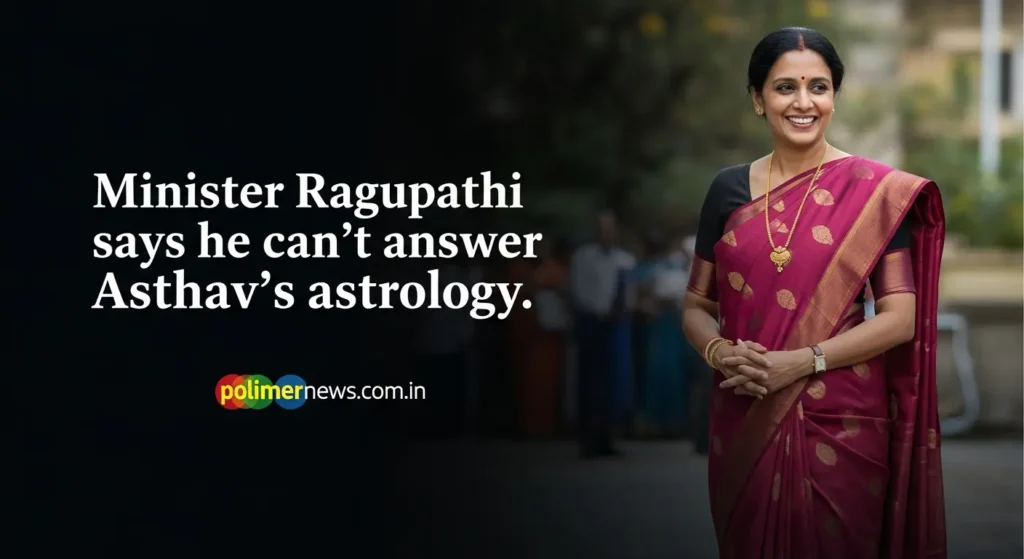
Asthav has become a familiar name in public discussions because of his association with astrology and its interpretation in connection with public figures. His name received increased attention after Asthav’s astrology became part of a wider political conversation, attracting interest from both supporters and critics. For many people, astrology is more than a traditional belief; it is also a way of interpreting personalities, events, and possible future developments. When these interpretations enter the world of politics, they can quickly generate public curiosity and debate.
The significance of Asthav’s astrology extends beyond the predictions or interpretations themselves. Much of the recent attention has been driven by the reaction of Minister Ragupathi, whose decision not to comment added a political dimension to the discussion. What might otherwise have remained a conversation about astrology gained wider attention because of its connection to a public figure and political leadership.
Asthav’s Public Presence
Asthav has gained public recognition through his involvement in astrology, predictions, and interpretations that appeal to a section of the audience. His work attracts people who view astrology as a way to explore subjects such as leadership, personal choices, destiny, and future possibilities. Over time, this visibility has helped his name reach audiences beyond the traditional astrology community, particularly when his interpretations are connected with well-known public figures.
This growing recognition helps explain why Asthav’s astrology became a topic of interest in a political setting. When individuals associated with belief-based subjects gain wider public attention, their views can naturally become part of broader social and political discussions. In Asthav’s case, interest in his interpretations led audiences and media commentators to seek reactions from political figures, further increasing public attention around the issue.
Astrology in Public and Political Discourse
Astrology and politics have shared a complicated relationship for generations, particularly in societies where traditional beliefs continue to influence everyday life. While many people consult astrology when making personal decisions, its role in political leadership remains a subject of debate. Supporters view astrology as part of cultural tradition and personal belief, whereas critics argue that governance should be guided by evidence, logic, transparency, and accountability.
The discussion becomes more sensitive when astrology enters political or official conversations. The questions surrounding Asthav’s astrology, along with the response from Minister Ragupathi, highlight the tension between personal beliefs and the expectations of public office. The incident raises questions about whether belief-based subjects should have a place in political discussions and how leaders should respond when such topics attract public attention.
The Statement: I Can’t Answer Asthav’s Astrology
When Minister Ragupathi said that he could not respond to questions concerning Asthav’s astrology, the remark quickly attracted attention from political observers and the media. What initially appeared to be a straightforward refusal soon became a topic of wider discussion. In today’s political environment, even brief statements from public figures can be closely examined for their meaning and possible implications. In this case, the response was notable because it appeared to draw a clear line between official responsibilities and belief-based subjects.
The minister’s choice of words also reflected a cautious approach to a potentially sensitive topic. By declining to comment on astrology-related questions, Minister Ragupathi’s statement reinforced the importance he places on governance, administration, and policy-focused discussions. Rather than becoming involved in speculation, he maintained a measured position and kept the focus on his role as a public representative.
Exact Meaning of Minister Ragupathi’s Statement
At its core, Minister Ragupathi’s statement can be understood as a clarification of his official limitations rather than a rejection of astrology. He did not openly criticize or support astrology. Instead, his response indicated that questions concerning Asthav’s astrology were outside the responsibilities of his public role. This distinction is important because it suggests that his decision not to comment was based on his position and duties rather than his personal views on astrology.
The neutral nature of the statement is also significant. By avoiding predictions, interpretations, or personal opinions, Minister Ragupathi maintained a clear focus on his institutional responsibilities. For many observers, this approach demonstrated the separation between personal beliefs and public duties, particularly when sensitive subjects become part of political discussions.
Why Minister Ragupathi Refused to Comment
One possible reason for the refusal was the risk of misinterpretation. Any public comment on astrology and politics could easily be taken out of context or lead to speculation, misinformation, or unnecessary controversy. As a public official, Minister Ragupathi has a responsibility to communicate carefully, particularly when his statements may influence public opinion or trust. By avoiding astrology-related commentary, he was able to prevent the discussion from distracting attention from important policy and governance matters.
Another important consideration was the responsibility associated with public office. Engaging directly with the Asthav’s astrology controversy could have shifted the conversation away from development, administration, and other governance priorities. By choosing not to comment, Minister Ragupathi maintained a clear focus on issues connected to his official responsibilities.
Political Leaders and Astrology: A Sensitive Topic
The relationship between political leaders and astrology has always been a sensitive one, particularly in societies where traditional beliefs continue to hold cultural importance. When astrology becomes part of political discussions, it can blur the distinction between personal beliefs and public responsibilities. Political leaders are generally expected to support rational decision-making and accountable governance, which is why associations with predictions or belief-based narratives can quickly attract criticism and debate.
The Asthav’s astrology controversy highlights this tension. A seemingly simple question or response can influence public perception, media coverage, and even how a political leader’s credibility is viewed. As a result, many public figures prefer to respond cautiously when confronted with subjects that fall outside their official responsibilities.
Astrology vs Evidence-Based Governance
Evidence-based governance depends on data, policy analysis, research, and measurable results, while astrology is primarily based on belief and interpretation. When these two approaches come together in political discussions, they can create tension over how public decisions should be made. Political leaders are responsible for decisions that can affect large sections of society, making rational analysis and accountability important aspects of effective governance.
The discussion surrounding Asthav’s astrology highlights this difference. Publicly engaging with astrology-related claims could be interpreted in different ways, including as an endorsement of belief-based approaches to decision-making. For this reason, Minister Ragupathi’s statement can be viewed as an effort to keep political responsibilities separate from subjects based on personal belief or speculation.
Risks of Commenting on Astrology as a Minister
One of the biggest concerns for a minister commenting on astrology is the possibility of public misinterpretation. Even a neutral statement can be taken out of context, amplified by media coverage, or presented in a way that creates a misleading narrative. In politically sensitive situations, remarks may also be interpreted differently by supporters and critics. This makes astrology-related discussions particularly challenging for public figures such as Minister Ragupathi.
Another important concern is the potential impact on a leader’s long-term political image. Associating official authority with astrology could lead to questions about priorities, judgment, or decision-making. Within the broader political astrology debate, choosing not to comment can therefore help political leaders avoid unnecessary controversy and keep attention on matters directly related to governance.
Media Reaction to Ragupathi’s Statement
The media response to Minister Ragupathi’s statement was swift and widespread. News channels, newspapers, and digital publications quickly picked up on his decision not to comment on Asthav’s astrology, presenting it as a noteworthy political development. Coverage often focused on the controversy surrounding the statement, which helped draw even greater public attention and pushed the discussion beyond the original question. The episode highlights how media coverage can influence the way sensitive political issues are understood, sometimes turning a brief response into a much larger public conversation.
Social media and digital platforms further increased the reach of the discussion. Short video clips, quotes, opinions, and commentary circulated rapidly, encouraging reactions from supporters, critics, and neutral observers alike. This level of attention demonstrates the growing role of media influence in political astrology debates, where the framing of a story can significantly affect public perception.
News Channels and Digital Media Coverage
Major news outlets closely examined the statement, offering context and commentary on Minister Ragupathi’s decision not to address Asthav’s astrology. Some analytical discussions compared his approach with that of other political leaders who have spoken about belief-based subjects, presenting his response as an example of caution and professional restraint. Headlines and discussion segments further increased public interest, showing how media coverage can play a major role in shaping political narratives.
Digital media platforms also contributed significantly to the spread of the story. Social media users, influencers, and bloggers discussed whether astrology should have any place in political or governance-related conversations. Hashtags, short clips, and viral posts helped Minister Ragupathi’s statement reach audiences well beyond traditional news viewers.
Social Media Response
The social media response to Minister Ragupathi’s statement was divided. Supporters welcomed his focus on governance and evidence-based leadership, viewing his decision to avoid speculation as a sign of responsibility and professionalism. Many comments emphasized that political leaders should remain focused on administrative duties and policy matters rather than becoming involved in belief-based discussions.
However, critics took a different view. Some argued that refusing to address questions about Asthav’s astrology overlooked public curiosity and the cultural importance that astrology holds for many people. Online discussions highlighted the challenge of balancing respect for traditional beliefs with the need for rational and accountable governance.
Public Opinion: Divided Reactions
The statement by Minister Ragupathi regarding Asthav’s astrology led to mixed reactions among the public. Many people supported his decision to keep the discussion focused on governance and avoid commenting on belief-based subjects. In an era where political statements can spread rapidly through news and social media, his restraint was viewed by supporters as an example of professional responsibility. They saw his position as consistent with evidence-based leadership and policy-focused governance, particularly in maintaining a distinction between personal beliefs and official duties.
However, some members of the public expressed a different opinion. Critics argued that refusing to address questions about Asthav’s astrology overlooked the cultural and traditional significance of astrology for many people. From their perspective, even a brief response could have acknowledged public curiosity and demonstrated greater engagement with popular sentiments.
Support for Minister Ragupathi
Supporters viewed Minister Ragupathi’s statement as further evidence of his rational and focused approach to leadership. By choosing not to comment on astrology, he was seen as maintaining principles of accountability, professionalism, and responsible governance. Many social media users and online commentators praised this position, arguing that belief-based discussions should remain separate from matters involving public administration and state policy.
His emphasis on policy and governance rather than speculation also appealed to people who value practical and responsible leadership. Supporters believed that political leaders should base important decisions on facts, evidence, and public interest rather than predictions or non-scientific claims.
Criticism and Questions Raised
Critics, however, argued that avoiding any commentary on Asthav’s astrology was a missed opportunity to address a topic that had attracted public interest. They suggested that acknowledging the subject, even briefly, could have helped connect cultural curiosity with greater political transparency. Discussions on social media and in online comment sections reflected some frustration, with certain users viewing the minister’s response as distant, cautious, or evasive.
This criticism highlights the ongoing tension between governance and public expectations. While the minister’s position may reflect a rational and policy-focused approach, it also demonstrates the challenges politicians face when addressing culturally sensitive subjects. The debate surrounding the Asthav’s astrology controversy shows how even topics outside conventional politics can shape public perception, generate discussion, and attract scrutiny from different sections of society.
Astrology’s Place in Modern Politics
The role of astrology in modern politics is increasingly complex. While cultural beliefs remain deeply rooted in society, political leaders are expected to focus on rational decision-making, effective policies, and evidence-based governance. The discussion around Asthav’s astrology highlights the tension between public curiosity and leadership responsibilities, as even brief comments can attract significant media and public attention.
In today’s political discourse, astrology remains a sensitive subject. Figures like Minister Ragupathi may distance themselves from belief-based narratives to maintain credibility and institutional integrity. His refusal to comment reflects the wider debate over astrology’s role in governance and the challenge of balancing cultural beliefs with rational leadership.
Cultural Beliefs vs Official Responsibilities
Astrology and cultural beliefs often shape public expectations, creating challenges for political leaders. While citizens may expect politicians to acknowledge astrology in cultural or ceremonial settings, their official responsibilities require a focus on governance and public welfare. Managing this balance requires careful communication to avoid misunderstandings or political criticism.
Minister Ragupathi’s approach reflects this delicate balance. By choosing not to comment on Asthav’s astrology, he emphasizes policy and professional responsibility over popular belief. This approach allows him to respect cultural sentiments while maintaining a clear focus on effective and responsible leadership.
Should Politicians Comment on Astrology?
Debates around whether politicians should comment on astrology remain ongoing. Supporters argue that occasional acknowledgment may resonate with culturally inclined audiences, while critics stress that such commentary can blur the line between governance and personal beliefs. Striking the right balance is crucial for maintaining credibility and public trust.
In the context of Asthav’s astrology, Minister Ragupathi’s refusal highlights the risks of engaging with speculative topics. Commenting could have fueled misinformation or distracted from governance priorities. His choice reflects a broader principle: political discourse should remain rooted in facts, responsibility, and professionalism, rather than belief-driven speculation, ensuring leadership credibility in the public eye.
Impact on Minister Ragupathi’s Political Image
The statement by Minister Ragupathi regarding Asthav’s astrology has influenced his political image. By avoiding belief-based questions, he reinforced his image as a rational and policy-focused leader. In a media-driven environment where political statements receive close attention, his measured approach has appealed to supporters who value evidence-based leadership and professionalism.
At the same time, the controversy increased his public visibility. Although some critics questioned his decision, others viewed his response as disciplined and strategic. By focusing on governance and responsibility, Minister Ragupathi demonstrated how political restraint can strengthen credibility and public trust.
Short-Term Media Impact
In the immediate aftermath of the statement, media coverage brought greater attention to the discussion surrounding Asthav’s astrology. News reports, headlines, and social media posts highlighted both the controversy and the minister’s decision not to comment. This increased the visibility of Minister Ragupathi and placed him at the center of a wider public discussion, showing how media coverage can shape political narratives.
At the same time, his refusal to engage in speculation helped limit sensationalism and potential misinterpretation. By maintaining a professional stance, he kept the focus on his role and responsibilities. This reflects the challenges of modern politics, where political astrology debates can influence a leader’s public image depending on how they are handled.
Long-Term Reputation Considerations
Over time, the minister’s stance may be viewed as an example of responsible leadership. By prioritizing governance over commentary on Asthav’s astrology, Minister Ragupathi reinforces an image of rational decision-making, professionalism, and integrity. This approach can strengthen his political credibility and appeal to those who value fact-based leadership.
Avoiding controversial or belief-driven statements also reduces the risk of criticism and misinterpretation. In the broader political debate, Minister Ragupathi’s statement demonstrates how leaders can balance public curiosity with their responsibilities. Such restraint can help preserve authority while supporting the broader principles of political accountability and ethical leadership.
Frequently Asked Questions (FAQs)
What did Minister Ragupathi say about Asthav’s astrology?
Minister Ragupathi stated that he could not answer questions related to Asthav’s astrology, emphasizing that belief-based topics fall outside his official responsibilities. He maintained a professional stance, focusing on governance rather than speculation.
Why did Minister Ragupathi refuse to comment on astrology?
The refusal was rooted in responsibility and accountability. Engaging with astrology could mislead public perception, create controversy, or distract from governance priorities, which he aimed to avoid.
Who is Asthav in this context?
Asthav is a public figure associated with astrology. His predictions and interpretations attracted attention when linked to political figures, making his name central to discussions about political astrology controversy.
How did the media react to Ragupathi’s statement?
Media outlets widely covered the statement, framing it as a politically significant moment. Digital platforms amplified the discussion, generating debates and dividing public opinion.
What was the public reaction to the statement?
Public opinion was divided. Supporters praised Minister Ragupathi for focusing on governance, while critics felt that ignoring astrology neglected cultural curiosity and public interest.
Does astrology influence politics?
While astrology has cultural significance, evidence-based governance remains the priority for political leaders. Statements like Ragupathi’s show how leaders navigate belief systems without compromising professional responsibilities.
What is the long-term impact of Ragupathi’s stance?
The minister’s refusal enhances his reputation as a rational, disciplined, and credible leader. It underscores professional boundaries while reinforcing public trust in governance.
Should politicians comment on astrology?
Engaging in astrology can blur the line between personal beliefs and public duty. Ragupathi’s choice to remain neutral highlights the importance of focusing on facts, policy, and accountability.
Conclusion
The discussion surrounding Minister Ragupathi’s statement on Asthav’s astrology highlights the delicate balance between cultural beliefs and political responsibility. In an era of intense media scrutiny, even brief comments from political leaders can attract widespread attention. By choosing not to comment, Minister Ragupathi reinforced his image as a leader focused on evidence-based governance, policy, and professional responsibility.
The incident also shows how media and social platforms can shape political narratives. Coverage of Asthav’s astrology turned a simple refusal into a broader public discussion, with some praising the minister’s professionalism while others viewed his response as evasive. Ultimately, the situation highlights the importance of clarity, neutrality, and restraint in political communication, which can help leaders maintain credibility and public trust over time.


